 Richard's Blog
Battery rethink: prismatic PHEV1 vs cylindrical M50L
IGNIS-8 carries a 2.2 kWh traction battery in a 1:5 reconnaissance vehicle. The original pack is a Samsung-made 6S2P module of PHEV1 cells — a factory-built automotive prismatic module, not a home-built assembly. When I started wondering whether a cylindrical 21700 pack could replace it with the same energy in a smaller, lighter envelope, the answer was not obvious: prismatic cells pack their active material almost perfectly, and switching to round cells usually means giving up volumetric density. The LG INR21700M50L turned that assumption on its head.
This post is the full comparison that drove the idea: the cell data behind both packs, the OCV and power-limit surfaces I generated for the VCU, and a realistic weight and space accounting. It is a design discussion, not a decision — nothing has been ordered yet. If it happens, the difference in build effort is stark: the Samsung module is a finished OEM part; the M50L pack would be hand-built from individual cells.
What is covered#
- The existing module: a Samsung-made PHEV1 prismatic 6S2P module (99 Ah, 22.2 V, 13 kg).
- The candidate: a hand-built 6S21P pack of LG INR21700M50L cylindrical cells (100.8 Ah, 22.14 V).
- 3D comparisons of the OCV and power-limit surfaces — and where the vehicle's real limits (125 A fuse, 150 A BMS clip) sit on them.
- The derated PLUT: how the M50L limits look once clipped to the BMS and temperature-derated like the PHEV1.
- Weight, volume and build effort.
- How both models are already wired into the VCU so the vehicle can run either pack from a single config line.
The existing pack: Samsung PHEV1, prismatic (OEM module)#
The traction battery of IGNIS-8 today is a Samsung-made 6S2P module of PHEV1 cells — an original factory module, with the cells, bus bars, compression structure and housing built by the manufacturer. The PHEV1 is an automotive prismatic cell in the VDA PHEV1 format — a rectangular aluminium-can cell, 173 mm wide by 85 mm high, roughly 21 mm thick. It is a prismatic cell, not a pouch: the electrode stack sits in a rigid metal housing with a pressure-applying constraint, which is how automotive prismatics are designed to run. Twelve of them (2P × 6S) give 99 Ah at a nominal 22.2 V.
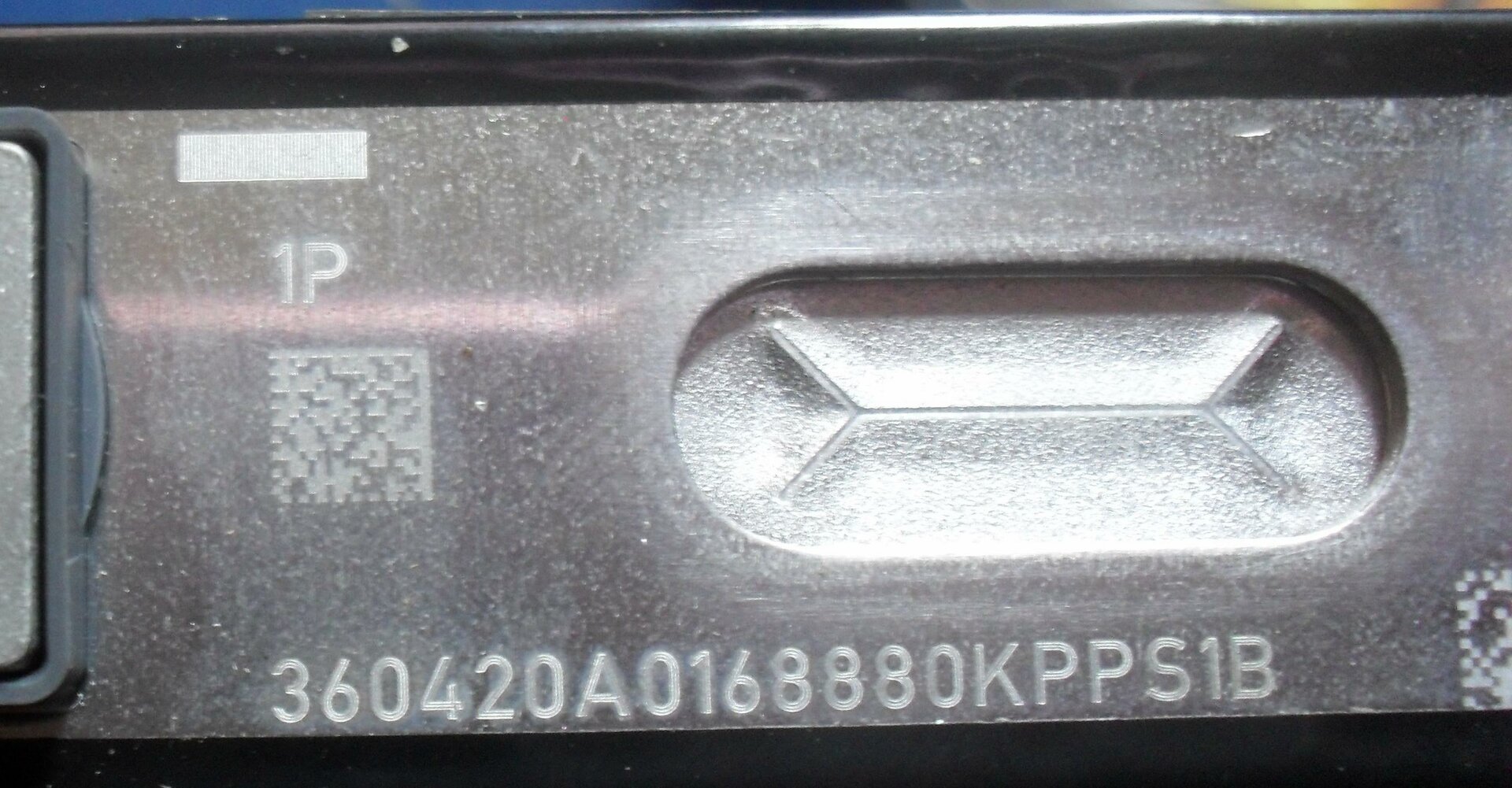
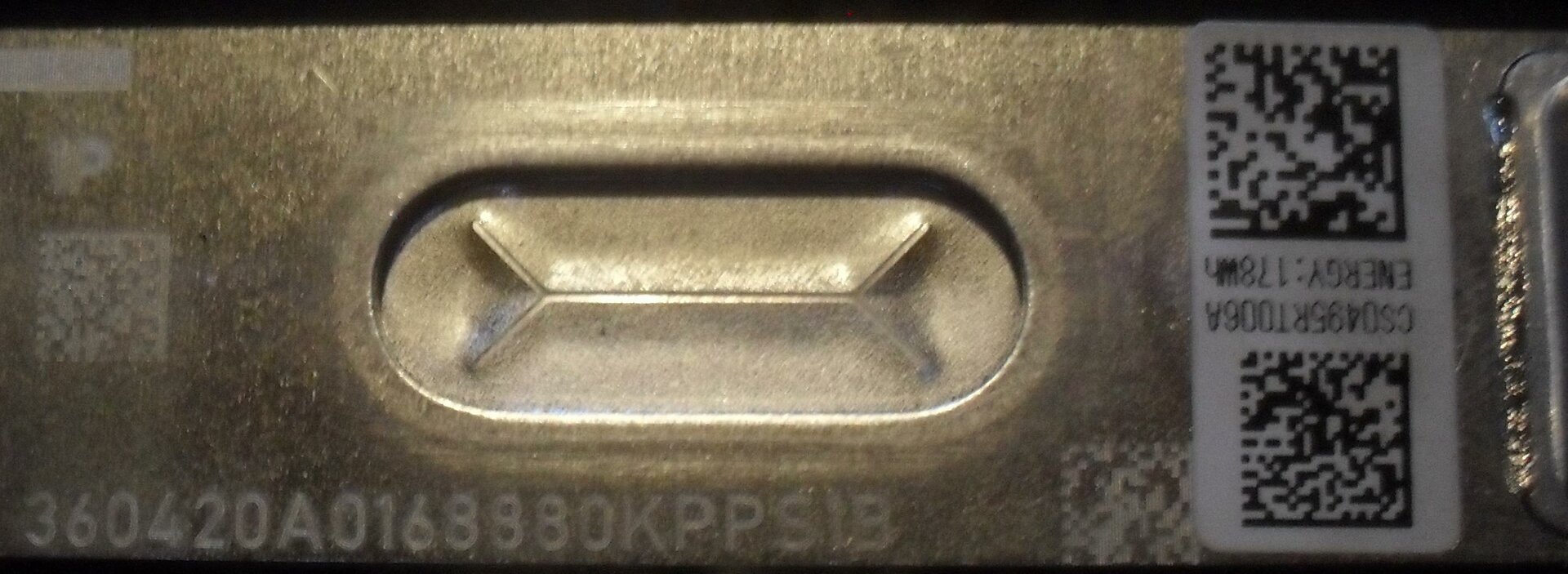
What the two photos above show is a Samsung 49.5 Ah PHEV1-class prismatic cell (same family, same format) out of a Ford Kuga PHEV module — the same cell type the IGNIS-8 OEM module is built from. The aluminium can, the flat faces that need to be held under pressure, and the large welded terminals are all visible.
Why prismatic was the original choice#
The PHEV1 format is an energy-density champion at the pack level. The aluminium housing holds the stack tightly, the cells stack edge-to-edge with almost no wasted volume, and the big flat faces make thermal contact and compression easy. For a vehicle that sits in a hall at 20–25 °C and rarely draws more than 27 A continuous, the cell's 150 A module limit was never the constraint — the motors are.
The price of that density is weight. The complete 6S2P module — cells, bus bars, holders and enclosure — comes in at 13 kg measured. Per-cell, the PHEV1 weighs about 0.87 kg and stores 3.7 V × 49.5 Ah ≈ 183 Wh, so the cell-level gravimetric density is roughly 210 Wh/kg. At the module level, with the structure added, 2.20 kWh in 13 kg is about 169 Wh/kg.
The candidate: LG INR21700M50L, cylindrical (hand-built)#
The LG M50L is a 21700 cylindrical cell — 21.15 mm diameter, 70.15 mm tall, 67.5 g — with a 5000 mAh-class rating (4.8 Ah nominal, 18.2 Wh). It is a high-energy NMC cell, the "L" revision of the well-known M50 line, with a 1000-cycle spec.
Unlike the Samsung module, this pack would be built from scratch: 126 loose cells, spot-welded nickel strips, a 3D-printed holder in hexagonal packing, and a hand-assembled enclosure. That is the central trade of this post — a lighter, denser pack in exchange for real build effort.
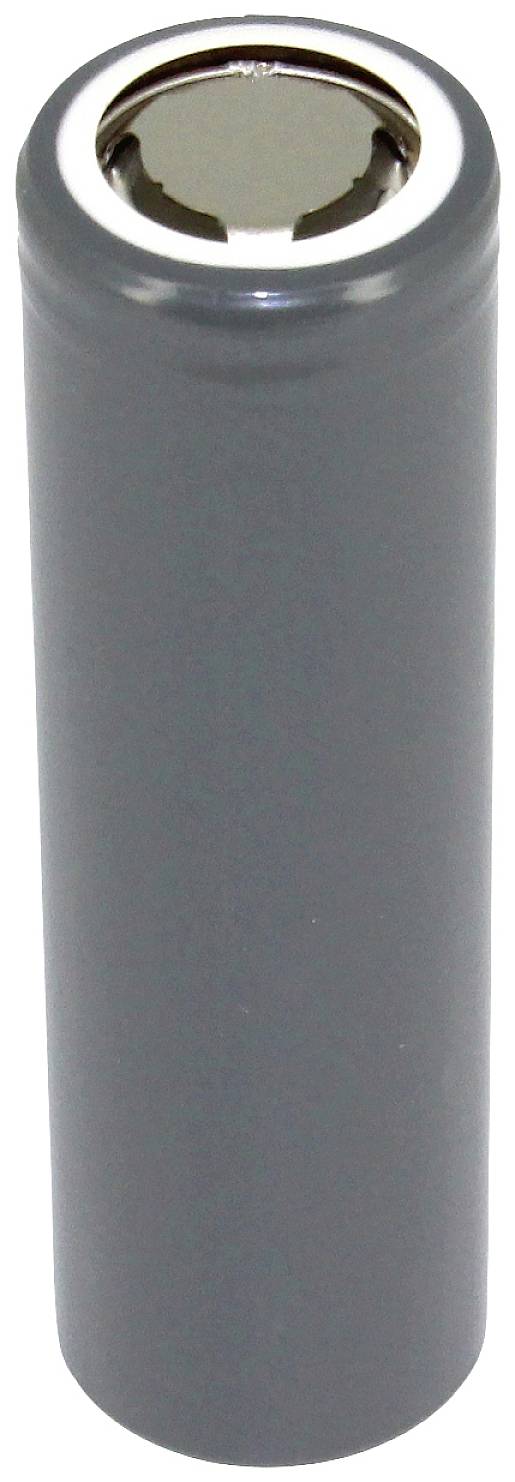
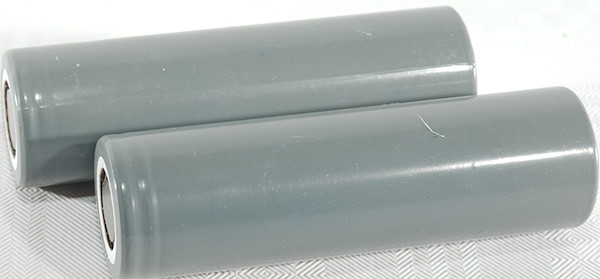
The LG cell (left, from the Conrad datasheet photo) and the earlier M50 variant (right, from lygte-info's bench test) show the classic cylindrical geometry: a small weld button on top, a steel or aluminium can, and — critically for the comparison — a geometry that packs into hexagonal honeycombs rather than flat stacks.
The topology: 6S2P vs 6S21P#
To hit ~100 Ah with the M50L you cannot use 2 cells in parallel — one 4.8 Ah cell would leave you at 4.8 Ah. The arithmetic is:
- Capacity target ≈ 100 Ah, cell capacity 4.8 Ah → 100 / 4.8 ≈ 20.8 → 21 cells in parallel (21P)
- Voltage target 22.2 V → 22.14 V / 3.69 V ≈ 6 cells in series (6S)
- Total: 6S21P = 126 cells
| Samsung PHEV1 6S2P (OEM) | LG M50L 6S21P (hand-built) | |
|---|---|---|
| Cells | 12 | 126 |
| Capacity | 99 Ah | 100.8 Ah |
| Nominal voltage | 22.2 V | 22.14 V |
| Energy | 2.20 kWh | 2.23 kWh |
| Cell mass (each) | ~0.87 kg | 0.0675 kg |
| Cell mass (pack) | ~10.4 kg | ~8.5 kg |
| Module mass | 13 kg (measured) | ~10.5–11 kg (est.) |
| Max discharge (30 s pulse, raw) | 150 A | ~1408 A @ 40 °C, 100 % SoC |
| Max discharge (derated) | 150 A | 150 A (clipped), 108 A @ 40 °C |
| Charge current (30 s pulse, raw) | 86–100 A | ~674 A @ 40 °C, 0 % SoC |
| Charge current (derated) | 86–100 A | 100 A (clipped), 86 A @ 20 °C |
The two packs land on the same voltage rail and nearly identical energy, but through completely different geometry: twelve large slabs against 126 small cans.
Weight and space: where the M50L actually wins#
This is the surprising part. A prismatic pack should pack better — the cells are rectangular and fill a box almost perfectly. So how can 126 round cells beat 12 slabs?
The answer is energy density per kilogram and per litre at the cell level. The M50L is a much newer, higher-density cell than the automotive PHEV1:
- PHEV1 prismatic: ~183 Wh in ~0.87 kg → ~210 Wh/kg, and with the module structure added, ~169 Wh/kg over the full 13 kg module.
- M50L cylindrical: 18.2 Wh in 0.0675 kg → ~270 Wh/kg per cell. A well-built hexagonal pack with holders lands around 200–212 Wh/kg once you add the structure.
For the same 2.2 kWh:
- Samsung module: 13 kg.
- M50L pack: 126 × 67.5 g = 8.5 kg of cells, plus an estimated 2–2.5 kg for holders, bus bars and enclosure → ~10.5–11 kg.
That is a real saving of roughly 2 to 2.5 kg — about 15 to 20 % of the battery mass — for the same energy, and it comes purely from the cell chemistry and format advancing in the years between the two designs. The prismatic format is not inefficient; the cell is older and heavier per watt-hour. Cylindrical 21700 cells have simply become the energy-density champions of the high-volume market, and the M50L sits at the top of that class.
Volumetrically the story is more even. The prismatic cells occupy almost exactly their bounding box; cylindrical cells leave hexagonal packing voids. Counting just the cells:
- PHEV1: 12 × 173 × 85 × 21 mm ≈ 4.38 L → ~502 Wh/l
- M50L in hexagonal packing: 126 × 24.7 cm³, ~90.7 % packing efficiency → ~4.15 L of envelope → ~640–650 Wh/l of true volume
So even with the honeycomb gaps the round cells come out ahead per litre, because the 21700 format packs its jelly-roll into a thin cylinder with far less dead structure than the prismatic housing. The practical caveat is that a hexagonal pack needs a holder that lets the cells breathe, and the module geometry must be designed and built from scratch (the Samsung enclosure is not reusable).
OCV surfaces: two voltage landscapes#
The open-circuit voltage (OCV) versus state of charge and temperature is the backbone of the SoC estimator. I generated both surfaces from the tables now embedded in the VCU — the PHEV1 values are the original pack data, the M50L values come from LG's measured 7-temperature OCV table, interpolated onto the six-column VCU grid.
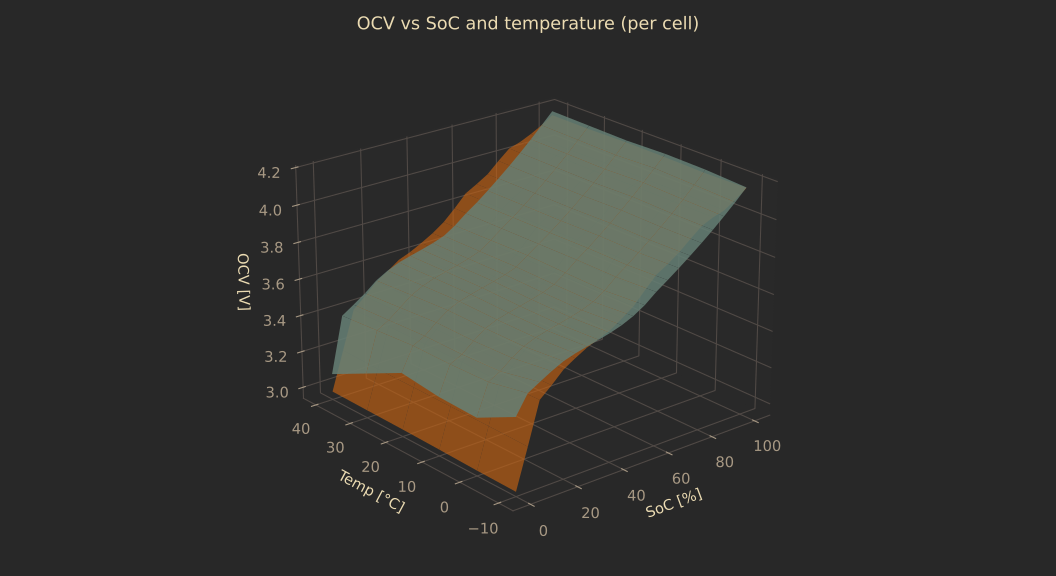
The two surfaces look similar at a glance — both are NMC-style with a mid-plateau around 3.6–3.7 V — but the details matter for the SoC estimator:
- The M50L surface is flatter in the middle (3.73 V at 50 % SoC) and steeper at the ends, so voltage tells you "how full" the pack is with a little less precision in the middle and more near the edges.
- Both cells now carry a real temperature dependence (the M50L up to ~35 mV between −10 °C and 40 °C at low SoC; the PHEV1 a little more). Neither surface is temperature-invariant anymore.
- Both saturate to ~4.2 V at 100 % and fall toward 2.5–3.0 V at 0 %, so the existing green/warn/error voltage windows in the HMI keep their meaning.
For the VCU this matters in one practical place: SoCFromOCV interpolates the active cell's surface, so switching from PHEV1 to M50L changes the reported state of charge at the same terminal voltage. That is exactly why the tables are configurable rather than hard-coded.
Power limits: the PLUT surfaces — and where the vehicle's limits sit#
The power-limit-under-temperature (PLUT) tables are what the VCU uses to set the allowed charge and discharge current for the present SoC and temperature. The PHEV1 table caps at the module's 150 A continuous rating. The M50L table is built from LG's measured 30-second maximum current curves, scaled cell value × 21 for the 21P pack. These are pulse limits, not continuous ratings — and that is where the comparison gets interesting.
Discharge (raw 30 s pulse limits)#
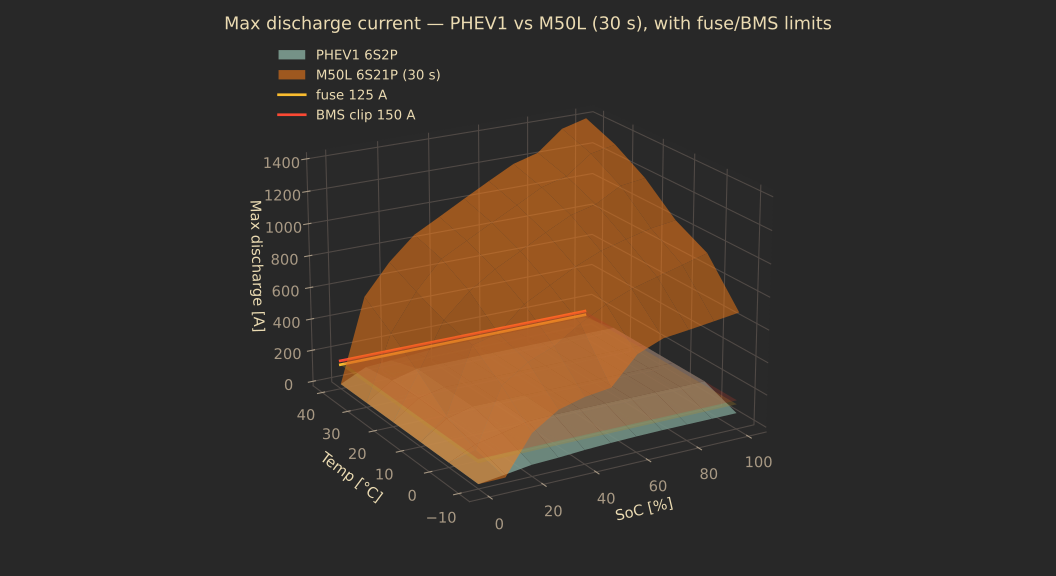
The two discharge surfaces could not be further apart:
- PHEV1 (blue): a smooth surface capped at 150 A almost everywhere, derating only below 20 % SoC or at temperature extremes. It hugs the 150 A plane.
- M50L (orange): a tall, SoC- and temperature-dependent pulse surface, reaching ~1408 A at 40 °C / 100 % SoC and still ~690 A at −10 °C / 100 % SoC.
Now the two yellow and red planes on the chart are the parts that matter for the vehicle:
- 125 A fuse (yellow): the battery-to-drive DC path is protected by a 125 A fuse. Nothing the vehicle can demand passes through it — this is the hard physical ceiling of the traction circuit.
- 150 A BMS clip (red): the Daly BMS clips at 150 A discharge as its upper current limit. The VCU reports this as the error threshold and derates before it.
Against those two planes, the difference between the packs collapses to a single insight:
- The PHEV1's 150 A ceiling sits on the BMS clip — the cell is the limiting element, and the BMS and cell limits coincide.
- The M50L pack is so far above both planes (~690–1408 A vs 125–150 A) that the battery is never the constraint. The fuse, the BMS, the cabling and the motors all become limiting before the cells do.
In other words: with the PHEV1 the protection chain is tuned to protect a battery that sits at its limit. With the M50L the same protection chain protects everything else — and the pack has roughly 10× the headroom the vehicle can ever use through a 125 A fuse.
Charge (raw 30 s pulse limits)#
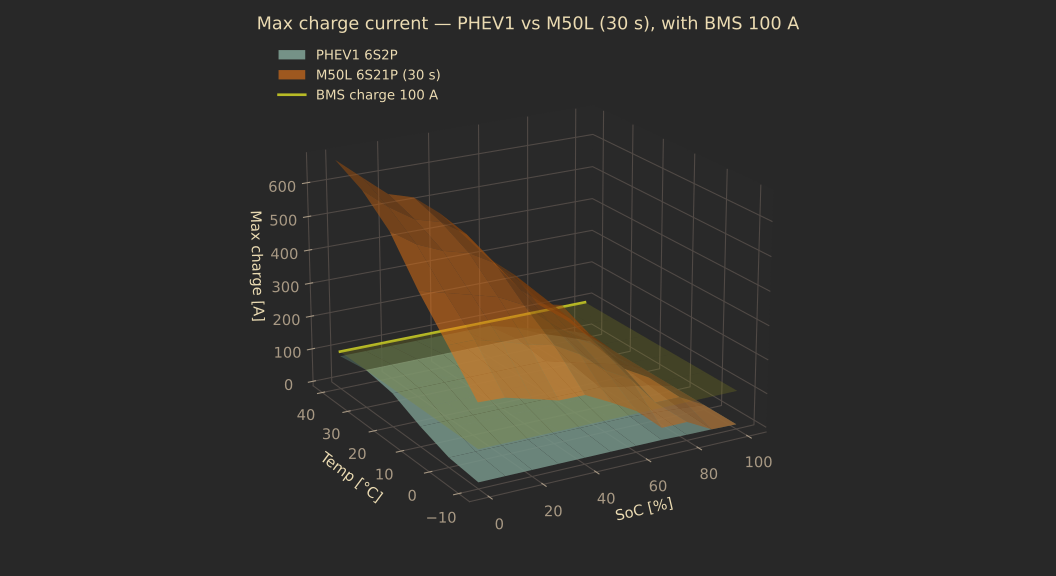
The charge surfaces tell a similar story:
- PHEV1 (blue): accepts up to ~100 A in the warm mid-range, tapering near full and at cold.
- M50L (orange): the 30 s charge pulse limits scale to ~40–674 A on the 21P pack, with the familiar fall-off toward high SoC (the pack does not accept current when full).
The green 100 A plane is the BMS charge clip. The M50L pack stays above it almost everywhere in the usable range — so even on charge, the battery is not the bottleneck; the charger and BMS are.
The derated PLUT: what the vehicle actually sees#
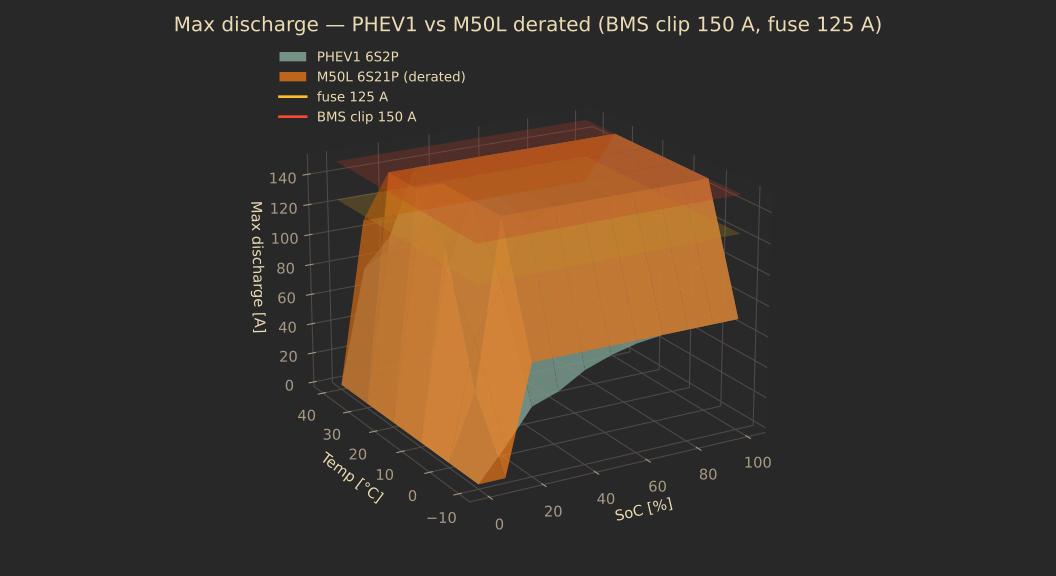
The raw 30 s pulse limits are the cell's physical capability, but the vehicle can never draw more than its protection chain allows. To feed the VCU realistic limits, I generate a derated PLUT for the M50L: the raw 21P values are soft-clipped onto the BMS ceilings (150 A discharge, 100 A charge) with a softplus curve — no hard knee, no value ever above the limit — and then a temperature derating is applied that mirrors the Samsung PHEV1 module (both cold and hot: 46.7 % at −10 °C, 72 % at 40 °C for discharge; 5–15 % at cold for charge).
Discharge, derated:
Charge, derated:
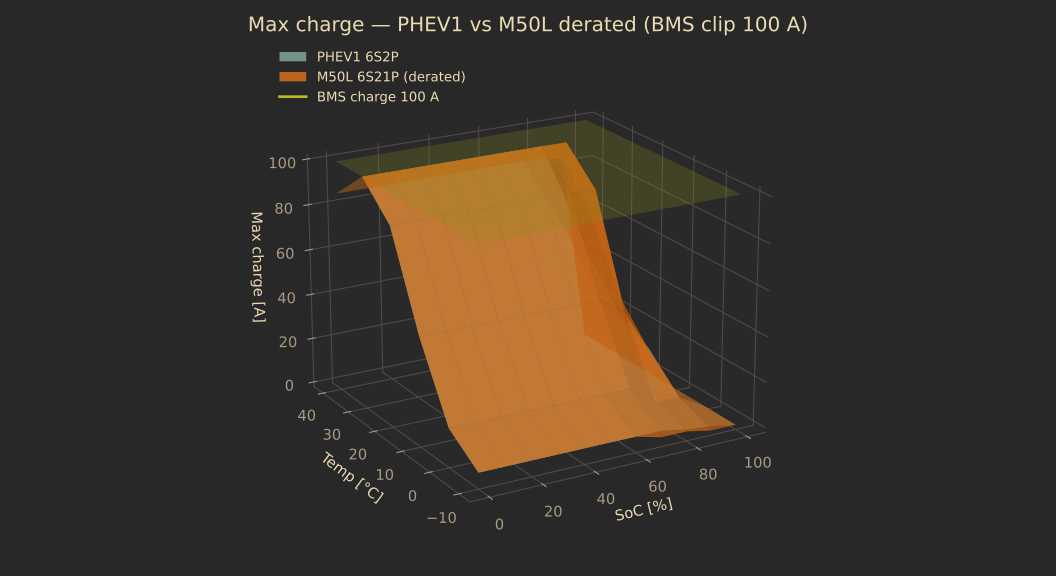
What the derated surfaces show is that, as far as the VCU is concerned, the M50L pack behaves almost exactly like the PHEV1 module:
- Discharge: 150 A flat in the warm mid-range, 108 A at 40 °C, 70 A at −10 °C, tapering to zero toward empty — the same shape as the PHEV1, just from a cell that has enormous unused headroom underneath.
- Charge: 100 A at 30 °C, 86 A at 20/40 °C, and heavily reduced at cold — again mirroring the PHEV1.
So the derated M50L PLUT is deliberately conservative: it makes the vehicle treat the M50L pack with the same caution as the Samsung pack, even though the cells could deliver far more. The raw 30 s tables are kept as the source data; the derated ones are what the software and the diagrams use.
Pros and cons: a frank comparison#
Samsung PHEV1 (prismatic, OEM module — current)#
Advantages
- Factory-built by Samsung: finished module with proper compression, bus bars and housing.
- High continuous current (150 A) across a wide temperature range — no cold derating until −10 °C.
- Generous charge acceptance (86–100 A).
- Proven, already measured and integrated (13 kg, 2.20 kWh).
- Few cells (12) mean few weld points, few sense wires, a simple BMS balance topology.
Disadvantages
- Heavier: ~210 Wh/kg per cell, 169 Wh/kg at module level.
- Older cell chemistry; the format is not the problem, the energy density is.
- Replacement cells of this exact type are second-hand automotive pulls, not fresh production.
LG INR21700M50L (cylindrical, hand-built — candidate)#
Advantages
- Higher energy density: ~270 Wh/kg per cell, ~200–212 Wh/kg pack-level.
- Lower mass for the same energy: ~2–2.5 kg lighter than the Samsung module.
- Abundant fresh production cells at commodity prices; well-documented (LG datasheet 2021-LSD-MBD-b00001).
- 1000-cycle spec at moderate depth of discharge.
- Massive discharge headroom: even through the 125 A fuse and 150 A BMS clip the cells are never the limiting element (~10× margin).
- The derated PLUT means the VCU sees limits identical to the PHEV1 — no software change beyond the config line.
- Hexagonal packing is simple to 3D-print and assemble.
Disadvantages
- Self-built: 126 cells to buy, match and spot-weld, a 3D-printed holder, a custom enclosure — real build effort and risk.
- 126 cells instead of 12: 126 weld points, more cell-balancing load on the BMS.
- The derated PLUT hides the headroom: the software limits the pack to PHEV1 behaviour even though the cells could deliver ~10× more — a deliberate safety margin.
- Module geometry must be designed from scratch; the Samsung enclosure does not fit round cells.
Already wired into the VCU#
None of this stays on paper. Both cell models are now embedded in the VCU's BMS package, and a single config line switches between them:
[battery]
cell_type = phev1   ; Samsung PHEV1 6S2P (default, current OEM pack)
cell_type = m50l    ; LG INR21700M50L 6S21P (candidate, hand-built)
pkg/bms/cell_phev1.go and cell_m50l.go hold the OCV + PLUT tables; the interpolation code in soc.go and limits.go is shared and reads the active cell. The SoC estimator and the current-limit thresholds therefore follow whichever pack is installed, with no code change beyond the config file. The M50L PLUT embedded in the VCU is the derated variant, so the vehicle's limits match the PHEV1 behaviour.
The M50L tables are generated from LG's measured data (OCV over 7 temperatures, 30 s max-current curves) via planning/battery/generate_m50l_curves.py, which reads the confidential source documents from a local directory, scales currents by the 21P factor, and applies a small deterministic jitter so the committed values are not byte-identical to the originals. It also emits the _derated PLUT variants (soft-clipped to the BMS + temperature-derated). The checked-in CSVs (planning/battery/module_6s2p_ocv_m50l.csv, the _m50l PLUT variants and the _m50l_derated variants) are the source of truth for the Go tables.
Next steps / status#
- Decision pending. This is a design comparison, not a build.
- The 30 s PLUT values are pulse limits; the derated PLUT deliberately caps them at BMS level. If the build happens, decide whether the conservative derating stays or whether the headroom should be exposed via a softer derating profile.
- Redesign the pack enclosure and 3D-printed holder for hexagonal 21700 packing and estimate the real mass.
- Verify the BMS can handle 21 parallel cells per group (balancing load).
- If the build happens: order cells from a batch with matching lot, weld with a proper spot welder, and commission with the
m50lconfig.
The short version: the M50L pack offers the same energy in a lighter, denser envelope, and its pulse capability is so far above the vehicle's 125 A fuse and 150 A BMS clip that the battery stops being the bottleneck entirely — so the software uses a deliberately conservative derated PLUT that mirrors the PHEV1 behaviour. The trade is building it yourself, many more cells, and leaving most of the pack's capability unused behind the protection chain. That is a trade I am inclined to take.